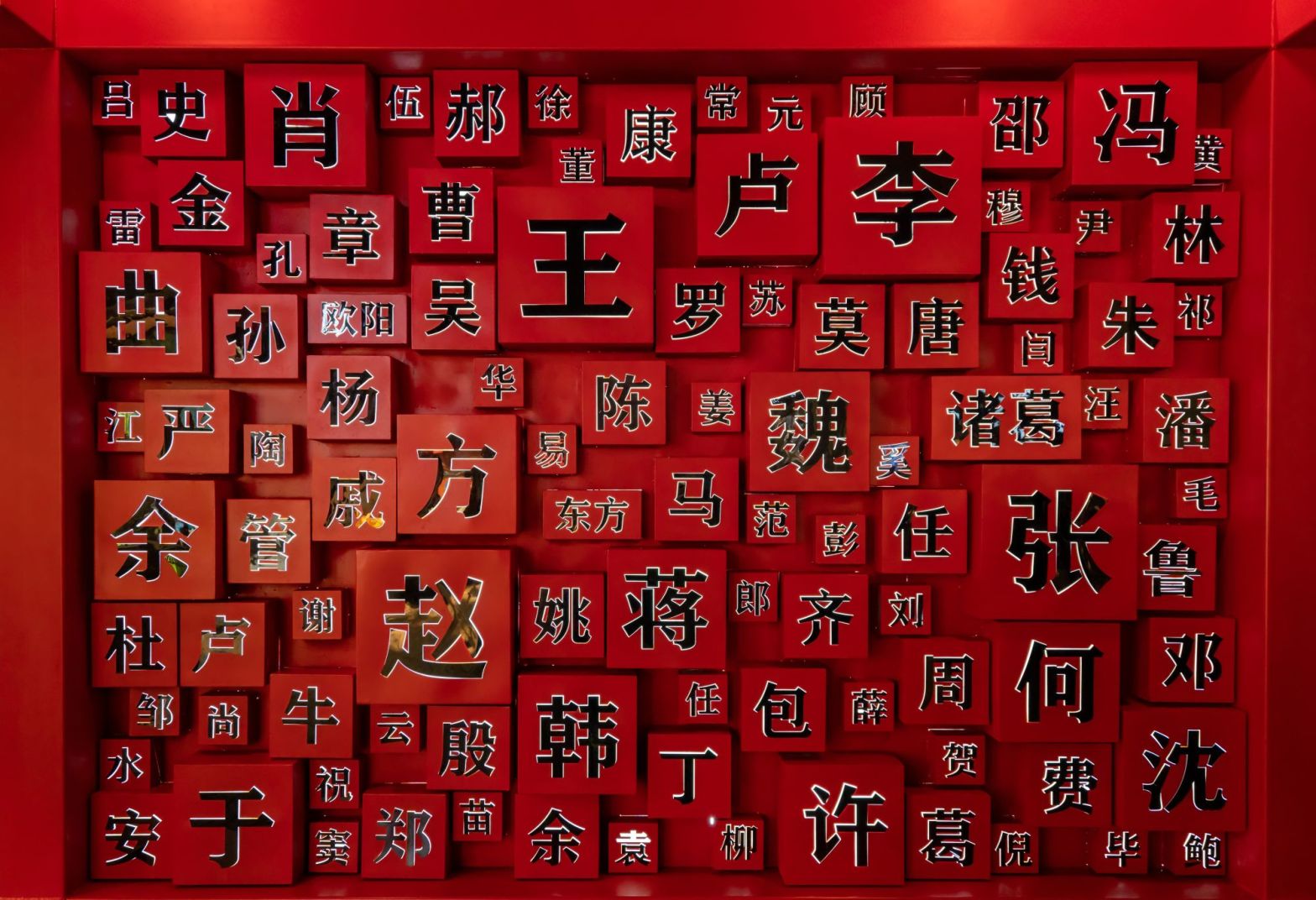
It used to be simple enough. Fantasy names were Conan the Barbarian, Elric of Melniboné, Aragorn son of Arathorn. That even applied to sophisticated SF races: Vulcans and Klingons made do with a single name each, for instance. No self-respecting fantasy character would have such a thing as a surname — unless, of course, they happened to be a Hobbit.
Things have changed considerably now, but there still persists the idea that people in the old days didn’t have surnames. But “the old days” never really existed, and if they had, they’d have been a lot more complex than people tend to assume. And that includes surnames.
Why Do We Use Surnames?
Broadly speaking, there are three conditions required for the development of surnames — a relatively small supply of personal names, a society where each individual comes into contact with many people, and some degree of bureaucracy in social structures. While surnames may arise without all three, these are generally the driving forces.
Early in human history, your tribe might have consisted of no more than two or three dozen individuals, and the choice of names (whether given at birth or initiation) might well be varied and creative. You might encounter someone with the same name at a larger gathering, but that was easy. If your name were Running Deer, for instance, you’d be Running Deer of the Wolf Tribe, rather than Running Deer of the Bear Tribe.
In post-Conquest England, however, things got tricky. The extensive choice of Anglo-Saxon names were quickly replaced among the peasants by a small number of Norman-introduced names.1 So a quarter of the men in the village might be called John, for instance, and it became necessary to distinguish between them.
This led, very soon after the Conquest, to the use of informal surnames to distinguish people with the same name. John who lived by a hill, for example, might be called John Hill; but his son, also John, who went to live by a brook, would become John Brook.
Nevertheless, these informal names gradually became formalised and hereditary. And this process took place across Europe, although not always at the same speed. In fact, Iceland still doesn’t use surnames, just a personal name and a patronym.
Surnames in the Ancient World
These weren’t by any means the earliest surnames used, though. A number of ancient societies had formal and universally used surnames, the best known being the Romans and the Chinese.
The Romans (in contrast to the Greeks, who stuck to patronyms, such as Pericles son of Xanthippus) had developed a complex naming system long before the end of the Republic in the 1st century BC. The nobility had three names: a personal name, a family name and a clan name. Thus Gaius Julius Caesar was Gaius of the family Julius, of the clan Caesar. The common people, on the whole, just had a personal and a family name.
The Chinese certainly had surnames (which came before the personal name) by the 3rd century BC, and probably earlier. The founder of the Han Dynasty, at the end of that century, was a man called Liu Bang, Liu being his surname. Since he was born a peasant, this suggests surnames were universal. At this time, personal names were normally just one character, though later two-character names became normal.2
What Roman and Chinese societies had in common was the need to define and record individual people. The most obvious reason for this was for taxation, but there were other civic requirements (military service, for instance) that meant the bureaucrats needed to identify individuals precisely.
Surnames in Fantasy Worlds
So should fantasy characters have surnames? Well, that depends on what kind of society they belong to. If they’re from a primitive tribe, probably not, whereas if they live in a large and well-organised nation (especially in a city), they’re almost certain to need one.
That doesn’t mean, though, that they have to be a boring personal name/surname structure. Full names can encode various information, as well as coming in different orders. In Russia, for instance, they traditionally used both a patronym and a surname. Lenin’s original name, Vladimir Ilyich Ulyanov, indicated he was the son of Ilya Nikolayevich Ulyanov, and his social acquaintances (as opposed to close friends) would have addressed him as Vladimir Ilyich.
I’ve used a similar idea for one particular society, where people have three names, with combinations used in different social contexts. For example, there’s a character called Fel Arith Fugon. Arith is his surname, and he might be addressed formally as Master Arith, while his close friends and family would call him Fugon. More casual acquaintances, though, would call him Fel Fugon, with the first name (always one syllable) only ever used in this combination.
I also have societies where the surname is preceded by a short word, roughly equivalent to de in France or von in Germany. For instance, the protagonist of my story The Guild’s Share, published late last year, is Loshi vi Assarid.
Many fantasy worlds nowadays include surnames for characters as a regular thing, but they don’t have to work the same way every time. Just research the wide variety of naming traditions found in our world — and then go one step beyond.
1 To some extent, this remained the case until quite recently. As late as the early 20th century, most lower-class people in England had one of a very small pool of names.
2 A character is the simplest word-element in Chinese, equivalent to a single syllable — though not necessarily the same syllable in different languages of the Chinese family.
 The Fantasy Worlds of Nyki Blatchley
Nice article. I’m not sure why I don’t use surnames, and rarely consider them, because they do provide options in referring to your character. I suspect it’s habit born out of initial laziness. That and needing to make every word count in short stories.
LikeLike