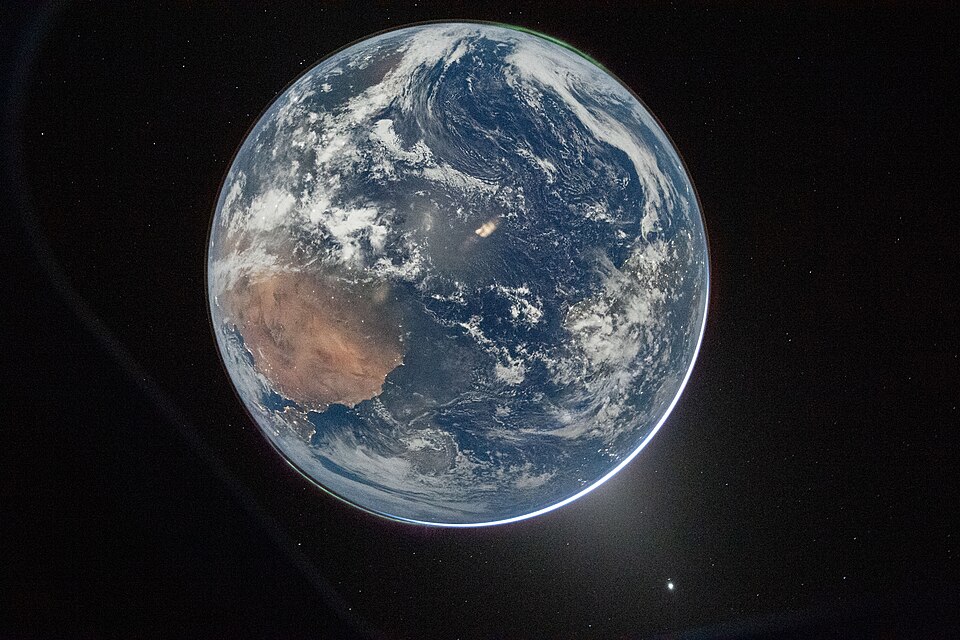
Fantasy authors get to do something that few other genres offer. We get to create our own world.
There are probably as many ways of doing it as there are fantasy authors, but there are certain common questions that are worth considering before you launch into your epic task. Because there’s one thing you can say with confidence about the process — it’s going to take you a lot longer than seven days to get it right.
In my next few blogs, I’m going to be looking at various aspects of world making. And I’ll start with some of the basic questions you might be asking yourself.
What Kind of World Maker Am I?
Most advice about world making tends to tell you that there’s one particular approach that you should follow. This is usually because it’s the approach that’s worked for the person giving the advice, so obviously it’s the correct answer. Of course, we’re all different, and what works for one person doesn’t really mean anything.
I’d group approaches to world making into four categories. That doesn’t mean that anyone needs to fit squarely into one or the other of these. Many authors use elements of more than one, or have different approaches for different projects. It’s a useful way of looking at it, though.
Winging It
The simplest way is just to make things up as and when you need them. This means you can dive straight into the story, but the big drawback is that you have to be extremely careful that you don’t introduce glaring inconsistencies.
It’s a method that has worked for many successful authors. For instance, Fritz Leiber once commented about the world Nehwon, the setting for his classic tales about Fafhrd and the Gray Mouser, that anyone who’d read all the stories would know as much about it as he did.
Outline and Write
This approach doesn’t start with a blank map, but also doesn’t require a fully created world before you can write a word. With this method, you sketch out the essentials about your world (or the part of it that concerns your story) and fit elements into it as you write.
That means you’re not just firing off ideas at random. You have a framework to slot things into, meaning you’re less likely to be inconsistent. However, you’ll need to do quite a bit of work before you even start on the story.
The Leapfrog Method
My favourite approach, this is really a variation of Outline and Write. The idea here is that you create a basic world and write a story, which involves creating more of the world — for example, a different country or a war long ago. Building that into the world then suggests more stories. My favourite example in my own writing was an off-the-cuff comment by a character which ended up adding three continents and four thousand years to my available settings.
What makes this better than Outline and Write, in my opinion, is that you get to write and build your world side by side. But be warned — it can be very easy to get distracted by new ideas.
Pre-Planning
This is where you completely construct every detail of your world before you even write a word of a story. Obviously, this will mean you have a rich, consistent world, but it’s going to be a long time before you write your story. And there’s no guarantee that, when you do get there, it’ll be the right world for the story.
Now, there’s a widespread belief that this was Tolkien’s approach, but that’s not really true. He was actually evolving Arda (and even the lynchpin languages) throughout his life, often as a result of the stories he was writing about it. At the time he started Lord of the Rings, for instance, he knew almost nothing about the Third Age and discovered it as he went.
What Kind of World Am I Making?
Besides choosing what kind of world maker you are, you also need to decide what kind of world you want to make. If you’re starting with a story idea, you’ll probably be reasonably clear about this, but all the same the same basic plot could play out in many different types of world.
If you’re dreaming up a world to give you story ideas, on the other hand, it’s entirely your call.
Our World but Different
It’s common enough for fantasy to be set in our own contemporary world, or at a known period of history, but with some differences. Harry Potter is the best-known example, and like many other stories this simply assumes that magic and the supernatural is hidden from ordinary people like you or me.
Other types imagine a world like ours, but where the supernatural world is commonly known, or at least not too frantically hidden. This is especially true in paranormal romance, where vampires, werewolves, angels or other strange beings are living side by side with ordinary people.
Alternatively, a common ploy is to have a world that’s taken a slightly different turn. The Roman Empire never fell, or the Beatles never existed. Or perhaps, instead of the scientific revolution, there was a magical revolution answering the same needs. This is more often used for SF, but fantasy can be set on alternative earths, too.
Our own world can also be used more approximately as the basis for a fantasy world. Many authors, including both Tolkien and Howard, have set their stories among imaginary civilisations that were supposed to exist before recorded history. Or else, like Clark Ashton Smith or Jack Vance, in the unimaginably distant future of our planet.
A Secondary World
If you create an entirely secondary world, that’s not meant to simply be our world in disguise, it can be as familiar or as unfamiliar as you like.
One approach is to have a world that could be ours but isn’t, and my main world is of this kind. That is, it’s a world of the same size and composition, with the same sun and moon, and the same flora and fauna, including humans. But the landmasses aren’t the same, and different nations, empires and histories have occurred, so the world is just like our own except for all the details.
Some secondary worlds, on the other hand, seek to have a few variations — more than one moon is a common one. Bringing in variation to an Earth-type world can benefit, though, from a bit of research and planning. If you have multiple moons, for instance, how do their phases work relative to one another? What effect does the situation have on the tides? You don’t need to be as rigorous as if you were writing SF, but it’s as well to avoid any obvious errors. Someone’s bound to notice.
Instead of having just a few cosmetic differences, you could create a world with fundamental differences. For instance, you could give it a completely different flora and fauna — including a different species standing in for humans. This can involve a good deal of work and research to make it believable, not to mention the challenge of creating nonhumans that readers will relate to. And, if you’re using this approach, for heaven’s sake don’t just call a rabbit a smerp.
A secondary world could be utterly unlike ours. The Narnian world, for instance, is flat with edges, and the stars are people. Leiber’s Nehwon has its surface on the inside of a hollow sphere — although I suspect that’s more of a joke than serious world making. And, of course, a secondary world can even be carried on the back of a giant space-turtle. Whatever you choose, make sure you think about all the implications of your choices.
Complexes of Worlds
Some fantasy works move between multiple worlds. The most common scenario involves space travel between planets — and yes, that’s more likely to be SF, but it can spill over into fantasy. Alternatively, the travel could be by magic or portals. Andre Norton’s Witch World series, for instance, is mainly set in the world of Estcarp, Escore and High Hallack, but several other worlds are visited at one time or another.
The amount of work to be done on the various worlds really depends on how important they are to the story. If most of the action takes place in one world, then that may be the only one that needs to be created in detail, with the others covered by the “winging it” method.
One thing that may be relevant in a complex of worlds is how the worlds interact — how they’re separated and how they’re connected. This is obvious with planets. Are they in the same system, and how does travel between them work?
If the worlds are reached by magic, how do the connections work? What medium do the various worlds exist within? And is there an intermediate stage, like the Wood Between the Worlds in C.S. Lewis’s The Magician’s Nephew?
What’s the Extent of My World?
How big is your world? And I don’t mean that in an absolute sense. I’m talking about how much of it you create.
The rule of thumb is to create a little more than you’re going to need. After all, you don’t necessarily want every part of your world that doesn’t actually feature in the story to be blank spaces marked “Here Be Dragons”. Perhaps your main character longs to travel to distant lands. If there are exotic goods for sale in the market, you might want to throw in the odd hint of where they come from. Or perhaps where that fine, expensive wine originated.
On the other hand, there’s no point in carefully constructing a whole world when you’ve no intention of writing about anything but a few countries. In the Chronicles of Narnia, for instance, we encounter Narnia, Archenland, Calormen, the Northern Waste and some of the eastern islands. We know there are other islands, and that somewhere there’s a land called Telmar, and we can assume there are other countries. But they didn’t need to be created.
What you create can be a country, a continent or an entire world. However much you make, though, you need to consider what those parts might interact with. And, of course, if you’re planning ahead to reuse the world in other stories, you might want it to be bigger than you need for now.
What’s the Timescale of My World?
There’s a tendency to create an artificial “present” for secondary worlds, which I’ve always found a strange idea. Unlike worlds based on our own, there’s nothing that automatically makes any time period in a secondary world an absolute present, and forcing that on it can limit what you can do with it.
If you’re only interested in telling the story of one group of characters, or one world-changing event, then you don’t need any other time settings. If, on the other hand, you plan on setting multiple stories in your world, you might want to explore different periods of its history.
And don’t forget, you can go forwards as well as backwards. My main world started as the usual pre-tech society (what some might misleadingly describe as mediaeval), but after decades exploring it, I’ve written stories set in everything from its Bronze Age to its Computer Age. It’s not only enabled me to write many very different types of story in the same world — I’ve also been able to explore how its historical interactions work.
If you’ve answered the questions in this blog, perhaps you’re ready to start making your world — however you choose to approach that.
In the next few blogs, I’ll be looking at how to make sure some of the essential components of your world work.

